About
I grew up during the Bosnian war. School was sporadic, sometimes dangerous, and the curriculum was whatever a teacher could improvise between air-raid sirens. What I learned from that isn't a heartwarming lesson about resilience: it's that education is fragile, that the structures people rely on can disappear overnight, and that the only thing nobody can take from you is the way you think.
That conviction eventually led me to philosophy. Much later I earned a Ph.D., spent more than a decade teaching critical thinking and philosophy at the City University of New York, and published research on reasoning, education, and the ethics of upbringing. Philosophy trained me to take arguments apart and find the hidden joints. It also made me a compulsive data reader.
When my daughter reached the age for New York City's Specialized High School Admissions Test (SHSAT), I did what felt natural: I collected every official test the DOE has published (eight years of sample material, close to a hundred reading passages, 1,368 questions, and more than five thousand answer choices) and ran statistical and linguistic analysis on the entire corpus. I mapped reading complexity by year, classified every question by cognitive task, and tagged every wrong answer by the specific trap it sets. Twenty-eight identified traps in total. Nobody had done this before, at least not publicly. Then I did the same for the Hunter test.
What came out of that work is this platform and the Baseline and Benchmark tests your child can take. Every practice test mirrors the real distribution of skills, difficulty, and traps. Every wrong answer is error-tagged. After each test, parents and tutors get a report that shows exactly which reasoning mistakes children fell for — not "needs improvement in reading comprehension," but the specific traps that made a wrong answer look right.
I built it for my daughter first. Then it seemed wrong to keep private what could help other families facing the same exams with the same uncertainty. I hope you find this useful. If there's anything I can do to help, feel free to reach out.
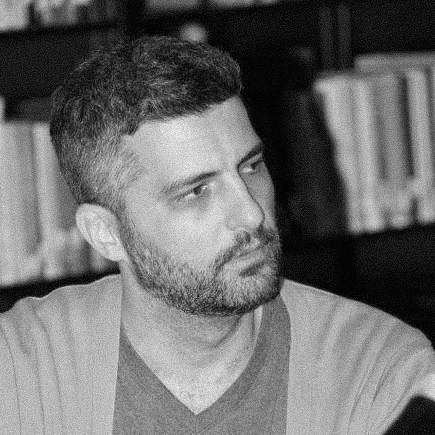
Founder
Eldar Sarajlic
Eldar Sarajlic is an Associate Professor at the City University of New York. With a Ph.D. in philosophy, he is an expert in critical thinking, particularly in its application to education. He published numerous scholarly studies in the world's leading academic and popular publications over the last decade. His passion is helping young people acquire thinking skills desperately needed in the world dominated by technology.