One thing all school curricula lack (even homeschool)
 Eldar Sarajlic
·
Eldar Sarajlic
·
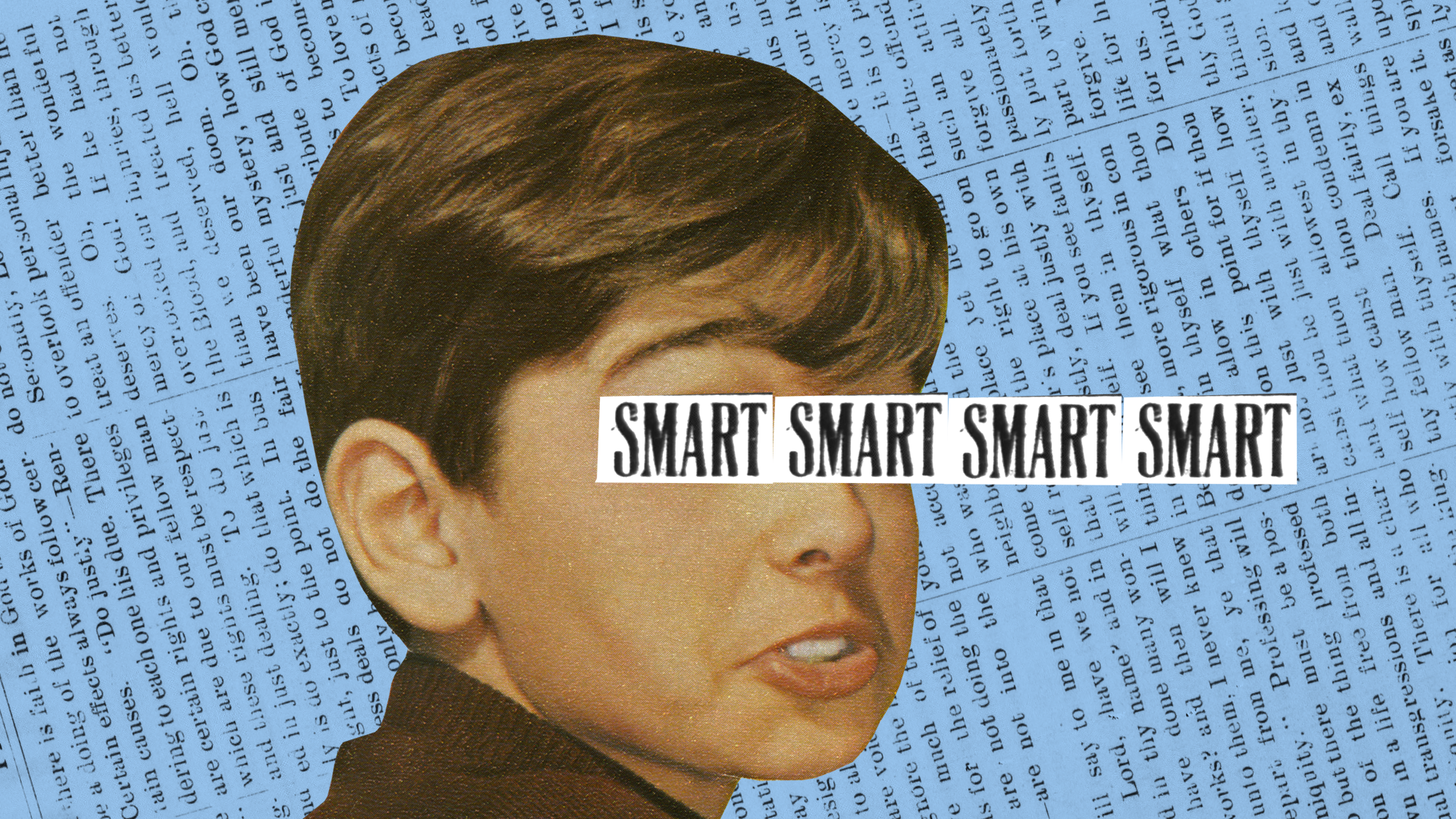
I’m sure you’re familiar with the term “an educated fool”.
It describes a person who, despite having an official college degree, can’t think properly. Maybe you know someone like this. They believe everything they see on the internet, have nonsense beliefs, and continuously make bad decisions in life.
Have you ever wondered why people like these exist?
One part of the answer may simply be IQ: the university system is not perfect (or perhaps too demanding, at least for some fields) and even low-IQ individuals can earn a Bachelor’s degree.
If this was the case, then the phenomenon would be an exception. But, people like these are everywhere, so it doesn’t seem like an exception. You see them the moment you open up any social network app and look through the comments on a random post about the weather.
The other possible answer, and the one that I think is right, is that something is wrong with the educational system (duh!) people like these go through. Namely, there is something missing in how we educate young people so they grow up lacking fundamental thinking skills despite being knowledgeable in their respective fields. I think there is a gap in our educational efforts spans all levels: from elementary to high school.
What exactly is missing, and why?
A different kind of skill
Most curricula, public or homeschool, focus on developing quantitative and verbal skills. Kids get training in math, writing, science and art. Through these they learn how to manipulate numbers, write coherent sentences, and adopt a huge amount of facts about different aspects of life.
But, what they don’t learn is how all these things fit together, and how they can be used to think beyond them. In other words, kids don’t learn the basics of critical thinking independently of the standard academic disciplines.
You might say, “oh, but isn’t that something my child will learn implicitly, when they learn math or science?” Sure, to some degree they might. But, I’ve been a professor of critical thinking and a researcher in education for more than a decade, and I’ve come to believe this to be a blind spot that permeates all education, both public and private, even homeschool. You may not see it because the definition of critical thinking has been inadequate.
Let me explain.
When I say critical thinking, I don't mean logic puzzles, debate club, a Socratic seminar, or a weekly discussion about current events. These things have value, but none of them are what I'm talking about.
I'm talking about the structural skills that underlie everything else a child does with their mind: recognize patterns, understand causality, reason without full information, or explain things with high plausibility. These are cognitive capacities that don't develop automatically, no matter how rich the content surrounding them is. They need to be taught separately, and intentionally.
This is because content and thinking are different things. Treating one as a substitute for the other is the single most common mistake in education, at every level.
What public school doesn't give your child
It’s very likely that most homeschool parents know this intuitively, even if they don't always articulate it: the decision to homeschool is partly a decision to provide their kids something schools can't. Something structurally different.
Public school curricula, almost without exception, are built around content delivery because content is measurable. It fits into a scope and sequence, it can be tested, reported, and compared across schools and districts. These are well-known structural constraints of public education. Many parents are aware of them, and this is probably one of the main reasons that drives many of them to find alternatives: they detest the cookie-cutter approach that tries to fit every child in the same mold.
While mere content delivery is deficient for many reasons, it’s particularly problematic in the context of development of critical thinking. Simply put, thinking skills don't work that way. Filling the child’s mind with pure content will not magically make them capable of distinguishing a real pattern from a coincidence or understanding why the brain manufactures explanations for random events. This can even have adverse effect: faced with too much unstructured content, a student easily gets confused, and often derives completely wrong conclusions. This is exactly what produces “educated fools.”
Something else is needed. I think that a separate, standalone curriculum focused exclusively on building the child’s critical thinking skills from scratch, can fill this gap.
While this is needed for all types of education, I believe the gap can currently be best closed by homeschooling parents, simply because they have more freedom in deciding the curriculum without burdensome bureaucracy or political approval. To do that, homeschooling parents don’t have to be better educators than classroom teachers. But because homeschooling is structurally free to add what schools structurally cannot, parents can include such a curriculum easily.
It can run alongside everything else, and will not only supplement what the children learn in math, science, or literature, but bring everything together to strengthen their child’s mind. In addition, it will compound over the years, returning the investment many years down the road.
In the age of AI, this is an imperative
I’d argue that doing this is more important today than it has ever been in history. Yes, I am talking about AI.
I want to be careful here, because this point gets made sloppily a lot. I don’t want to claim that AI is coming for your child's future and raise unnecessary panic. That’s a click-bait strategy I have no interest in; my argument is more specific, and I think more important.
We genuinely don't know what the world will look like in fifteen years. We don't know which jobs will exist, which skills will be automated, which industries will restructure beyond recognition. Anyone who tells you otherwise with confidence is selling something. By definition, we can't know. The future hasn't happened yet, and this particular future is moving faster than anything we’ve seen before.
But, what we can say is this: the things AI does well are the things that only look like thinking but aren't. It retrieves, recombines, predicts the next plausible word or image or solution based on patterns in its training data. It does this faster and at greater scale than any human. If your child's education prepares them primarily to retrieve and recombine (to recall facts, apply formulas, follow established procedures) then they are being prepared to compete with a machine. And the machine will always win.
However, what the AI cannot do is the thing that makes thinking genuinely human: reason under genuine uncertainty, about novel situations, with incomplete evidence, where the thinking framework itself is part of what's at stake. I am talking about the capacity to look at something the world hasn't seen before and think carefully about it. The ability to recognize one’s own, and another person’s emotions. The capacity to imagine yourself in another person’s shoes, and understand their motivations, reasoning, and incentives.
These are critical thinking skills machines don’t have. They are also skills neglected in most educational curricula, and that needs to change, as soon as possible.
Still, don’t get me wrong. This isn't an argument for ignoring content. A child who doesn't know anything has nothing to think with. Content is important, but it’s not the entire story.
My argument merely suggests that we must treat critical thinking as its own subject, as seriously as math or language, because in the world our children are entering, it's the one capacity that genuinely can't be outsourced.
What a standalone thinking curriculum looks like
Saying all of this is not just another academic exercise for me. Yes, I am an academic, but I am a father, first and foremost, one concerned about my own child’s education. The critical thinking curriculum is not just an idea I had: it’s one of the most important projects of my life.
I am actually building one, as I write this, for my daughter, after deciding that nothing available in the education market was good enough. Even though I am a philosophy professor who has taught critical thinking at the university for over a decade, I couldn't find a structured, sequential thinking curriculum for children that reflected a proper conceptualization of what thinking skills really are.
So I started from scratch.
Most books about critical thinking you can find today are either collections of puzzles or lessons about argument structure and analysis. These are useful things, but they don’t tackle the core problem: developing the child’s ability to understand how the world really works, and to apply that understanding in anything else they might do.
The curriculum I am developing is organized around five structures that I believe reflect the imperatives of understanding the world as it truly is: patterns, uncertainty, causality, explanations, and decision-making. Why these? Well, I’m a firm believer in the first-principles approach to education. To master a skill, a child needs to start at the basics and build their way up. Our world is made out of patterns, so the skill of recognizing them is the foundation; everything else depends on it. Our world is also messy, and often random, and a child needs to be able to think together, not against, this uncertainty. That’s the only way causes can be discovered from the effects (and distinguished from pure noise), and decisions can be made that will benefit, rather than harm them.
That’s why these five structures form chronologically ordered building blocks, where one structure rests on the previous one. The way I designed them is suitable for starting as early as age 8, and as late as 16. You can see it here.
For example, my daughter is 11 years old right now, and she’s learning about pattern recognition from the first textbook in this curriculum (called “Seeing Patterns”). Once she masters the skill of pattern recognition, she’ll have a great foundation to understand how to think with patterns: how to use them to predict the future when information is scarce, how to recognize randomness and noise and not be fooled by it. From there, she’ll learn how to reason about causes, how to explain things well, and how to make the best decisions for herself.
I decided to make this curriculum public and available to like-minded folks because I believe I’m not the only parent who thinks this way. There’s many of us who are either unhappy with how the public school system is educating our children, or who took things in their own hands and started homeschooling. Whatever may be the case, the future of our children is in our hands, at least partly, and any responsible parent I know is ready to do their part.
Each module in the curriculum (there are 9 planned in total, spanning ages 8-16) contains 52 lessons that can be spread over the entire year. Each lesson takes about 20 to 30 minutes, and it can be read both by the child themselves, or with the parent.
I want to stress that this curriculum doesn't replace anything already on the child’s schooling schedule. It sits alongside math, language, science and does something none of them do on their own: it builds the underlying cognitive architecture that brings all of it together, and makes everything else more powerful.
This is not for everyone, though. It’s an investment of both time and energy that not every parent, honestly, has. Some of us are either too busy with life, or have other plans for our kids.
But, if your thoughts about education are similar to mine, perhaps you will find this investment worthy of your choice. I don’t know what the future will bring, but I do know that the world our children are growing into will reward that investment more than almost anything else we could add to their schedule.
You can find Seeing Patterns here, and read more about the full curriculum here.
Let me know if you have any questions or need help.
Stay sharp
New research and test-prep insights, straight to your inbox.
What next?
Start with a free baseline test. Full exam, full error analysis, no credit card.
SHSAT Prep
Full-length adaptive practice tests reverse-engineered from the official DOE handbooks. Free baseline test with error analysis.
Start SHSAT prep →See the science behind it
How we analyzed over 1,300 questions and five thousand answer choices to figure out what the SHSAT is really made of.
See the method →Free baseline test
100 questions. Full error analysis. No credit card required.
Start the free baseline test →