Worried about AI and your child's future? Teach them this instead
 Eldar Sarajlic
·
Eldar Sarajlic
·
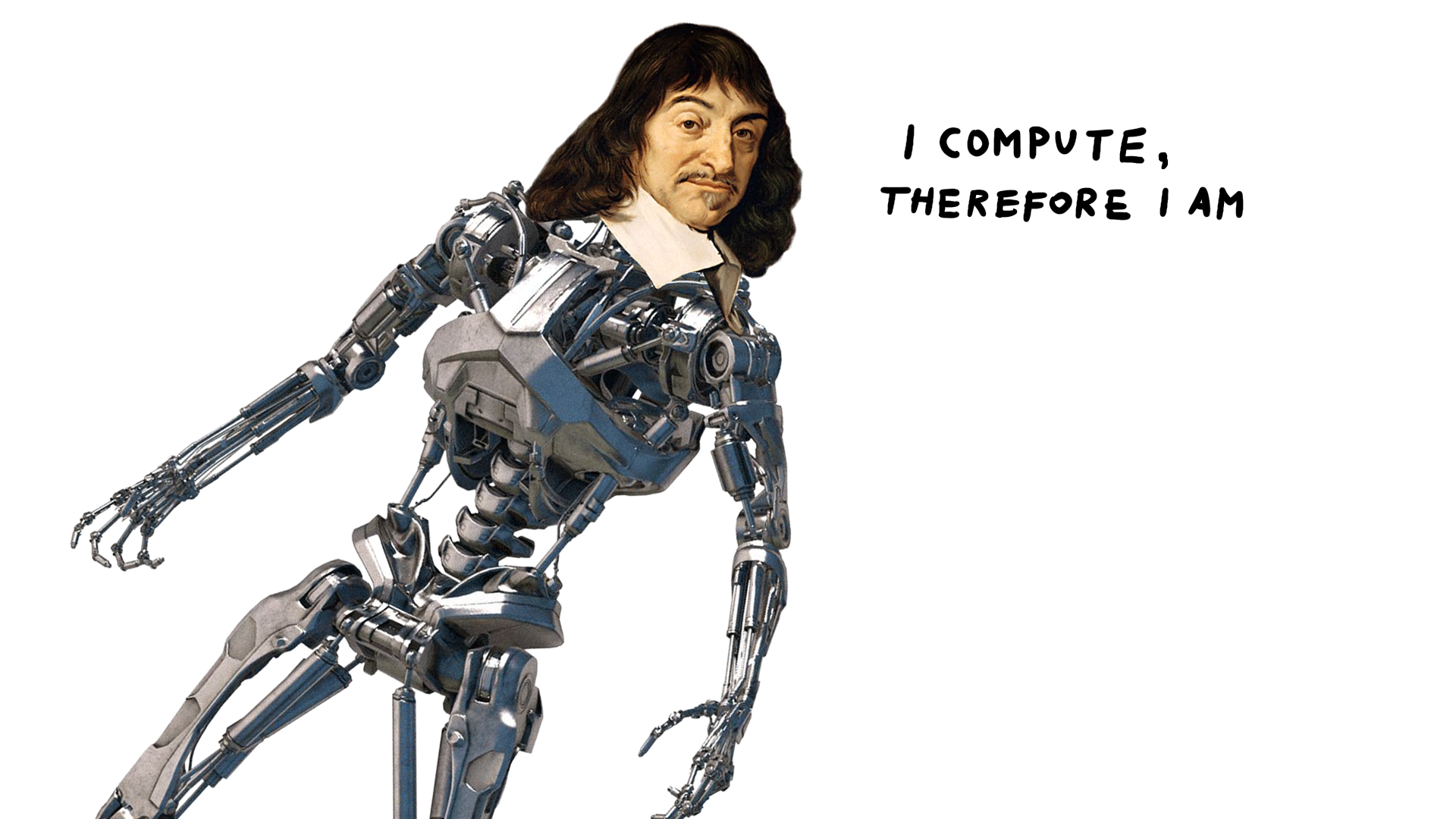
The wild world of AI
If you're a parent right now, you've probably noticed two things at once. First, AI is everywhere: your child's friends are using it, schools are scrambling to figure out what to do about it, and the headlines swing between "this will solve every problem" and "this will replace everyone."
Second, nobody is telling you what your child actually needs to know to grow up well in a world shaped by it.
The advice you do get tends to be one of two kinds. Either: teach them how to use AI tools, get them prompting early, this is the future. Or: keep them away from it, it's destroying their ability to think. Both feel incomplete, and both feel like guesses.
I want to suggest a third path. It starts with a simple observation: nobody actually knows what AI tools will look like in ten years. The chatbot your child uses today will be gone or unrecognisable by the time they finish high school. Teaching them to use it well is a bit like teaching them to operate a particular brand of car they will never drive again.
What will still matter in ten years is something deeper: the ability to understand how machines think, where their abilities come from, where they fail, and how to think clearly alongside them. That is what I would call AI literacy, and it is something very different from knowing how to prompt a chatbot.
The good news is that you do not need a computer to teach it. In fact, I would argue the computer gets in the way.
Why "AI literacy" usually misses the point
When schools and ed-tech companies talk about AI literacy, they almost always mean tool fluency, i.e. knowing which buttons to press. That's a skill, but it isn't literacy. Real literacy is access to a system of thought, not a set of practical tricks. When we say a person is literate in the ordinary sense, we don't mean they can decode letters. We mean they understand how language works, how arguments are built, how a story is structured, how meaning is made. That kind of literacy is durable, and it survives every change in technology.
AI literacy, properly understood, should be the same. It should give your child a way of thinking about machines that won't go out of date, because the underlying ideas don't go out of date.
There is also a real worry behind all of this. A 2025 MIT Media Lab study using brain scans found that students who relied on chatbots to write essays showed weaker brain activity, remembered less of what they had written, and over time became increasingly passive, copy-pasting whatever the AI gave them. The study was small and is still being debated, but it points to something many parents already sense: when children outsource their thinking, they don't just produce worse work. They become worse thinkers.
This is the real risk to your child's future. Not that they won't know how to use AI; they will figure that out in an afternoon. The risk is that they will reach for it before they have built the mental muscles that make them genuinely capable in the first place.
What AI actually is (in plain terms)
Here is the thing most AI conversations, unfortunately, skip over: AI is not really a technology. It is a method. Specifically, it is the formal study of problem solving: how to take any problem, break it down into clear pieces, and let a machine work through it step by step.
If you understand that AI is a way of solving problems, then teaching your child about AI becomes much simpler. You don't need a chatbot. You need to teach them about problem solving itself, and the dozen or so big ideas that make AI possible.
These ideas are some of the most beautiful and useful concepts in human thought. They were borrowed from logic, philosophy, mathematics, and psychology, and they describe how all good thinking works, human and machine alike.
Learning these concepts gives your child two things at once. First, they will understand AI better than most adults, including the ones who use it every day. Second, they will become a sharper, more disciplined thinker themselves. The same ideas that let us understand a chatbot also let us understand our own minds.
The twelve big ideas
Here are the concepts I think every child should learn, ideally before they spend much time using any AI tool. I have listed them in the order they build on each other.
1. Abstraction. Before you can solve any problem, you have to decide what to ignore. Abstraction is the art of stripping away unimportant details so the structure of a problem becomes visible. Children do this naturally when they draw a stick figure or play pretend; learning to do it deliberately is a foundational thinking skill.
2. The problem space. Every problem can be described as a starting situation, a goal, and the moves you're allowed to make in between. This is true of a chess game, a maze, planning a birthday party, or resolving an argument. Once a child can describe a problem this way, they can think about it clearly.
3. Search. Once you know what a problem looks like, solving it is like exploring a maze. There are different ways to explore (going deep down one path or trying a little of every option) and each has tradeoffs. This teaches children that how you search for an answer is as important as what you find.
4. Heuristics. Heuristics are rules of thumb, shortcuts based on experience that help you guess where the answer is likely to be. Experts don't think harder than beginners; they have better shortcuts. Children learn that expertise isn't about effort but about the quality of one's mental shortcuts.
5. Three kinds of reasoning. There are three basic ways to draw a conclusion: deduction (when the answer must be true if the premises are), induction (when something is probably true based on past patterns), and abduction (when you guess the most likely explanation for what you're seeing, what detectives do). Most adults muddle these three together. A child who can tell them apart will reason far more clearly than most grown-ups.
6. Knowledge representation. How you organize what you know shapes what you can do with it. The same facts arranged as a list, a tree, a map, or a story make different things possible. This is one of the most underrated thinking skills a child can learn.
7. Belief revision. Smart thinkers update their beliefs when evidence changes. There are actually rules for doing this well, and AI uses them too. A child who learns to revise their beliefs in proportion to evidence is being inoculated against both stubbornness and gullibility.
8. Training data. Modern AI doesn't follow rules: it learns from examples. Whatever examples you give it shape what it can and can't do. The same is true of children; what they're exposed to shapes how they think. Understanding this makes children both better consumers of AI and better self-aware learners.
9. Models. A model is a simplified version of how something works. Some models are simple and easy to understand; others are so complicated that even their creators can't explain them. Children learn that simple isn't always wrong, and complicated isn't always right. This is a crucial lesson for a world full of confident-sounding experts.
10. Underfitting and overfitting. Two ways thinking goes wrong: being too rigid (missing real patterns because you've decided in advance what's true) or being too flexible (finding patterns in noise — superstition, conspiracy theories, hasty generalizations from one bad experience). Every child should learn these two failure modes. They explain an enormous amount of bad thinking in the world.
11. Optimization. Improving anything (a drawing, a skill, a relationship) is like climbing a hill in fog. You can't see the top, but you can feel which direction is up, and you take small steps. Sometimes you reach a peak that's not the real peak, a "good enough" place you're stuck in. Understanding this helps children know when to keep refining and when to start fresh.
12. Language and prediction. Modern chatbots do one simple thing: they guess the most likely next word, over and over. From this very simple operation, they produce text that sounds like a person wrote it. Children who understand this stop being mystified by chatbots and start being able to interrogate them.
That's it. Twelve ideas, and none of them require a computer. But, all of them sharpen a child's thinking in ways that will outlast any specific technology.
Why pen and paper
When children learn about AI by using AI, something unfortunate happens: they get fluent at the surface level but stay confused about what's underneath. The tool does the thinking, and the child just steers. This is the opposite of education, and the world is slowly becoming aware of that. Many schools are ditching tablets and other gadgets.
When children learn about AI by working through problems with pen and paper, like drawing search trees, sorting examples into categories, working out the difference between a good guess and a hasty one, they build the mental muscles that the AI itself depends on. Basically, they come to understand AI from the inside.
This is also a much better fit for homeschooling, because it doesn't require a subscription, a piece of software, or a fast internet connection. It requires a notebook, a pencil, a parent or tutor who is willing to think alongside the child, and time.
What this gives your child
A child raised on these ideas will not be afraid of AI, and will not be dazzled by it. They will know what it is, what it can do, where it fails, and how to use it without being used by it. They will be harder to fool, by chatbots, by hype, by people who confidently misuse technical language. They will be harder to replace, because they will be able to think with these systems instead of being merely replaced by them.
But there is also a deeper reason to teach this. The ideas behind AI (abstraction, problem framing, heuristics, evidence, fitting and overfitting, optimization) are not just ideas about machines. They are ideas about thinking. Teaching your child these concepts is not really teaching them about AI at all. It is teaching them how to think clearly in a world full of noise. AI is just the most useful excuse we currently have to teach what should have always been taught.
A note on what's next
I'm currently designing a course based on these twelve ideas, aimed specifically at homeschooled children and built entirely around pen-and-paper work. If you'd like to know when it's available, or if you have thoughts about what would make it most useful for your child, I'd love to hear from you.
The best curriculum is one shaped by the real questions parents are asking, and right now, those questions are urgent.
In the meantime, you can begin at home. Pick any one of the twelve ideas above and spend a week on it with your child. Draw together. Make examples. Work through real problems. You don't need to be an expert. You just need to be willing to think slowly, in writing, with your child beside you.
That, more than any chatbot, is the foundation your child needs.
Stay sharp
New research and test-prep insights, straight to your inbox.
What next?
Start with a free baseline test. Full exam, full error analysis, no credit card.
SHSAT Prep
Full-length adaptive practice tests reverse-engineered from the official DOE handbooks. Free baseline test with error analysis.
Start SHSAT prep →See the science behind it
How we analyzed over 1,300 questions and five thousand answer choices to figure out what the SHSAT is really made of.
See the method →Free baseline test
100 questions. Full error analysis. No credit card required.
Start the free baseline test →