
Our analytics
Scientific and data-based approach to test prep.
Here's the truth few test-prep companies will tell you: nobody really knows how the SHSAT and Hunter tests are really constructed and what they truly measure. The Department of Education (DOE) never releases the guidelines or the scoring rubrics. So, everyone offering test-prep is basically guessing (some do it better than others, of course). What I do is, in some sense, no different than that. But, instead of guessing using intuition or anecdotal evidence, I rely on systematic, scientific, and data-based analysis of the actual test material. Here's how I did it:
For the SHSAT, I collected eight years of DOE-released test samples: more than a thousand pages of test material, close to a hundred reading passages, roughly 1,300 questions, and more than five thousand answer choices. Then I ran statistical and linguistic analysis on all of it to figure out what this test is really made of. I did the same for Hunter. You can see some details of my SHSAT analysis below.
Everything on this platform is built from those findings. Every practice question, every distractor, every error tag. This is not yet another AI-powered test prep platform. It is built on rigorous analysis and a deep understanding of the tests themselves. It is fully human-designed and data-driven.

01 — What students are up against
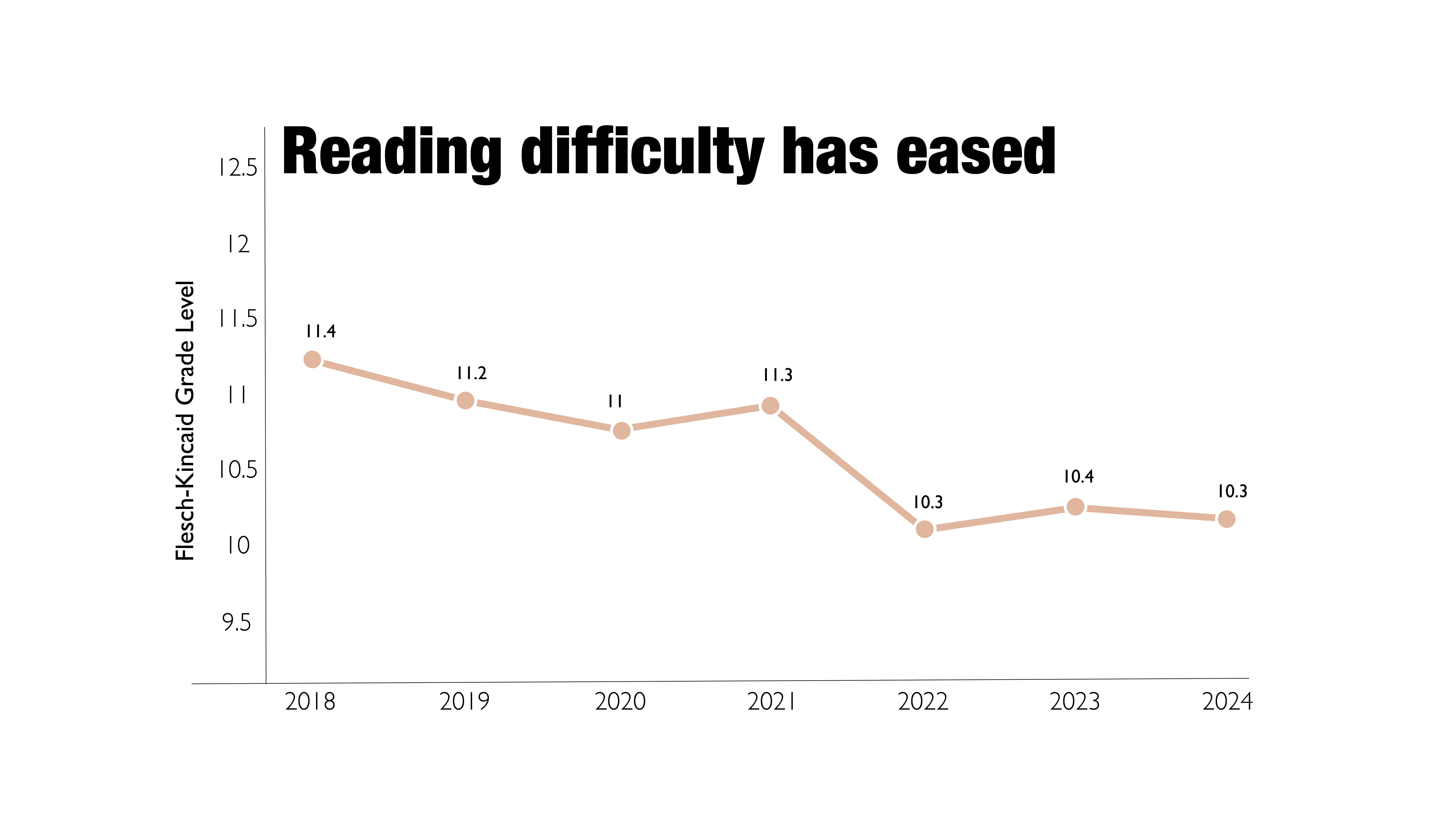
SHSAT passages read at an 11th grade level.
The students taking SHSAT are eighth-graders. My analysis of reading complexity across all released passages (using the Flesch-Kincaid Grade Level scale) shows they are expected to read three grades above their level. Some passages run at genuine college-level difficulty.
02 — What the test actually asks
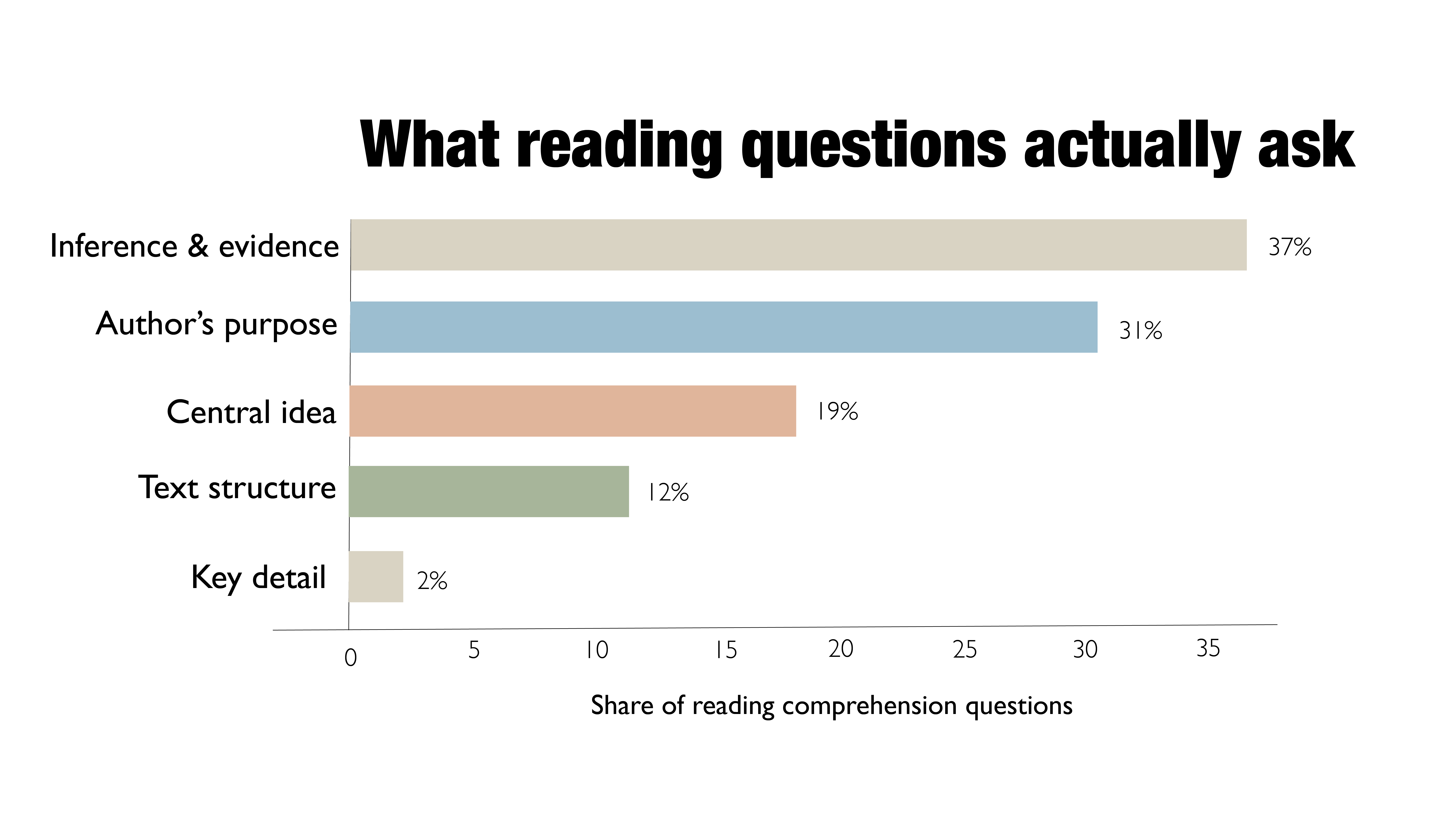
More than a third of questions ask the reader to draw an inference.
I classified every reading comprehension question by the kind of task it requires. Interpretation and inference dominate. Nearly a third ask about the author's rhetorical or narrative choices. This tells students exactly where to focus their prep.
03 — How wrong answers are engineered
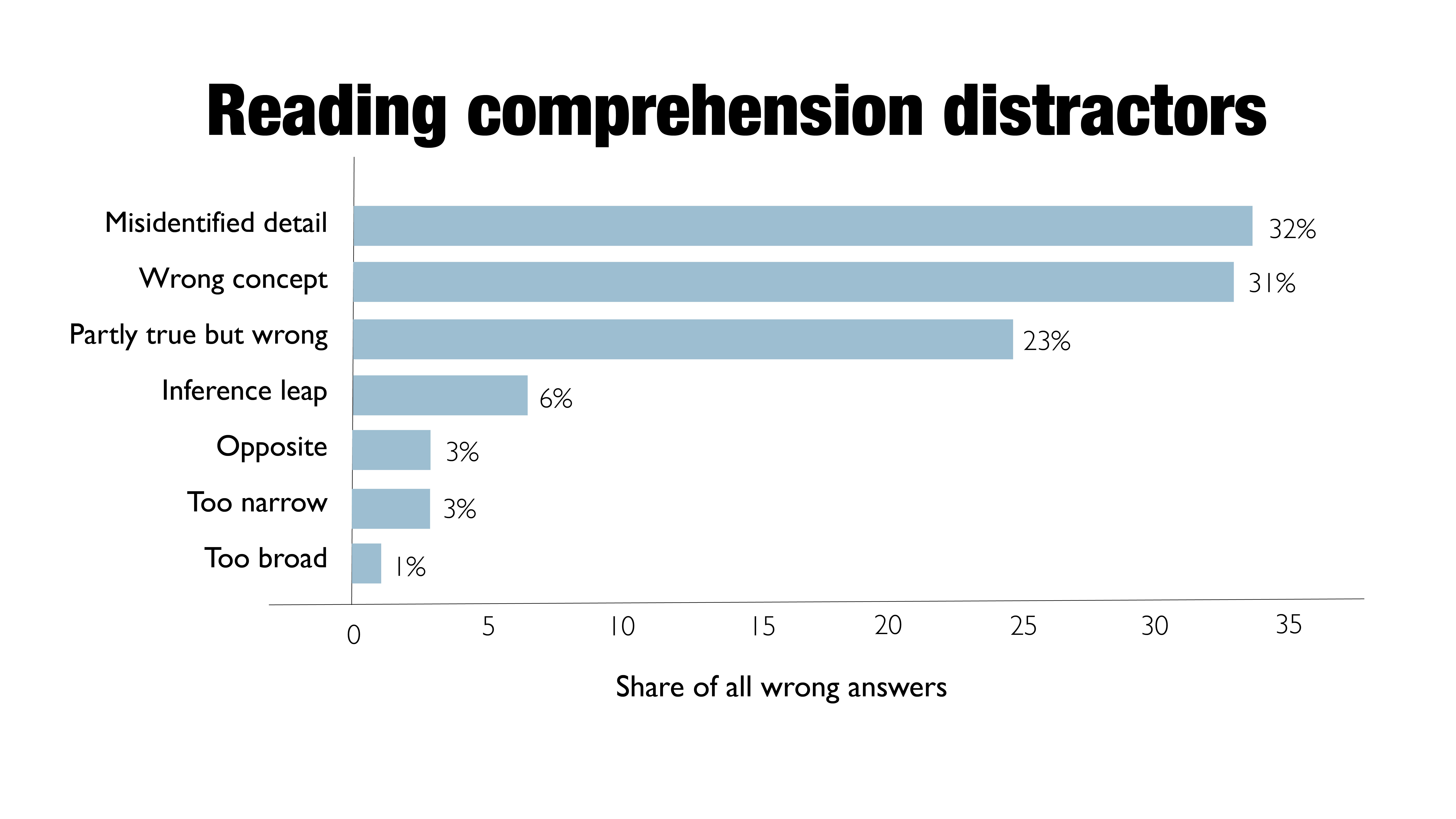
Every wrong answer on the SHSAT is designed to catch a specific mistake.
I analyzed every wrong answer choice in the ELA reading comprehension section and categorized them by trap type. A misidentified detail points to something genuinely in the passage, but not the thing the question asks about. A wrong concept sounds reasonable but rests on a misunderstanding. The partly-true-but-wrong trap is the cruelest: accurate in part, which is exactly what makes a hurried student grab it.
04 — Math is not immune
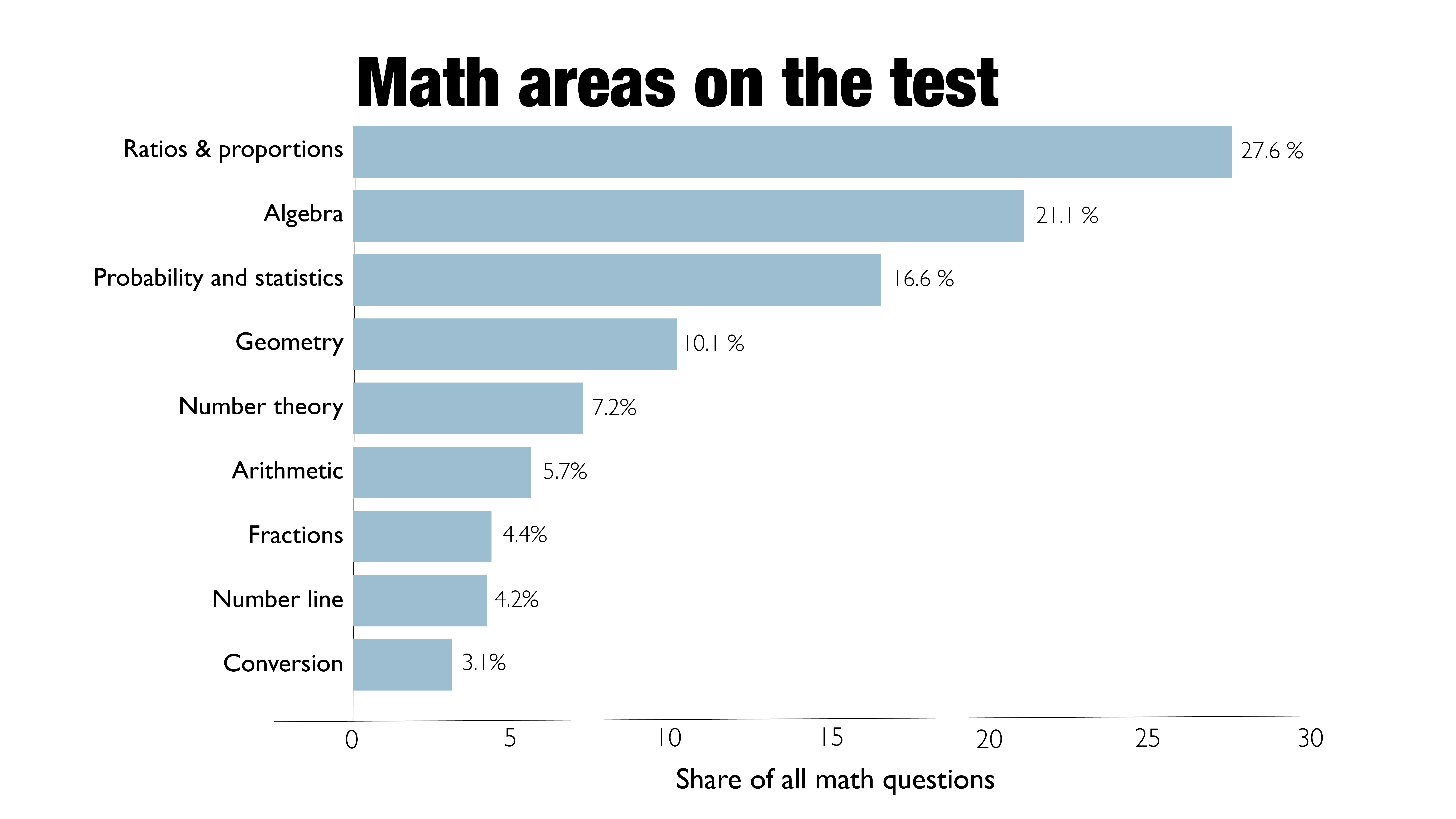
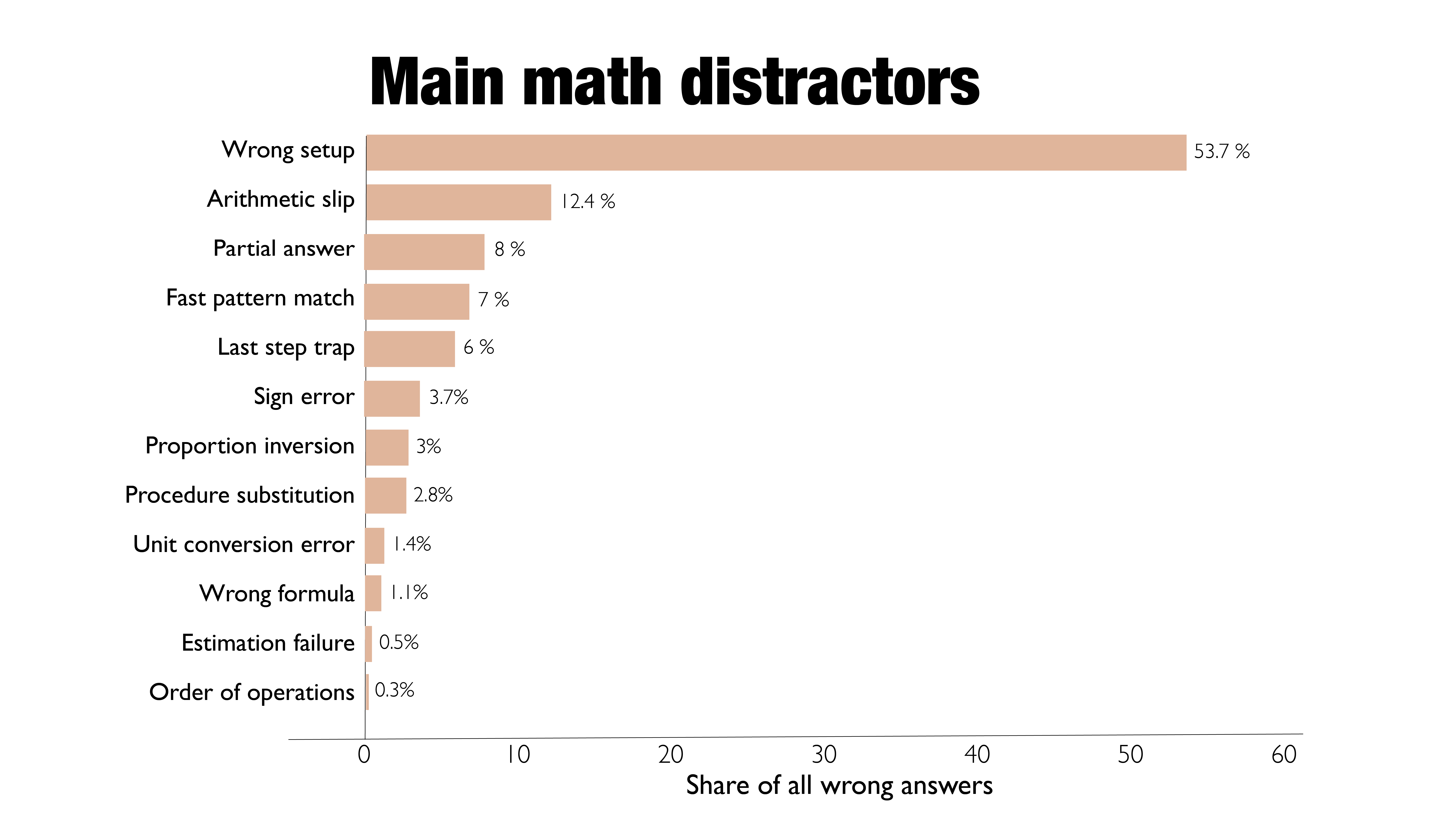
Ratios, proportions, and algebra sit on top. The traps are in the setup.
The math section is organized around several sub-topics, with ratios/proportions and algebra as the most frequently tested skills. More than half of all math distractors offer answer choices based on a wrong setup of the problem. The rest prey on small, predictable mistakes: arithmetic slips, premature answers, or a dropped sign before the parentheses.
05 — What I built from this
Practice tests that reflect the real distribution.
I took everything I learned and built Baseline and Benchmark tests that reflect, as exactly as mathematically possible, the real distribution of complexity, skills, and distractors used by the DOE. Every question is written by hand to hit the same traps the real test uses. Every wrong answer is tagged by trap type. Every explanation was written and structured by a person, not generated by a chatbot.
After each test, the error analysis shows which trap types caught your child and how often, breaks down accuracy by skill area, tracks which mistake patterns persist across tests, and projects school placement against real cutoff scores.
Ready to try it?
Start with the free Baseline Test. Full error analysis, no credit card.
See available tests